Waterfront living is a dream for many, offering breathtaking views, serene surroundings, and the unique lifestyle that comes with proximity to the water. Yet, the very elements that make waterfront properties desirable—waves, tides, storms, and saltwater—also present distinct challenges for landscaping. Designing a beautiful shoreline landscape is not just about aesthetics; it’s about durability, resilience, and creating an environment that thrives despite the elements. At Gulf Coast Land & Marine Construction, we understand how to balance beauty with functionality, ensuring waterfront landscapes remain stunning and sustainable for years to come.
Understanding the Challenges of Waterfront Landscaping
Waterfront properties face unique environmental stresses that typical landscapes do not. Saltwater intrusion, fluctuating water levels, high humidity, and strong winds can stress plants and soil. Additionally, erosion caused by tides and storm surges can threaten the stability of yards, gardens, and even hardscape elements. Without proper planning, waterfront landscaping can quickly deteriorate, leading to costly repairs and frustrating maintenance challenges.
Soil erosion is one of the biggest concerns. Over time, waves and water runoff can wash away topsoil, leaving plants exposed and destabilizing your landscape. Flooding can also introduce saltwater to areas that plants may not tolerate, and high winds can uproot shallow-rooted species or damage structures. Understanding these challenges is the first step toward creating a resilient waterfront landscape.
Choosing the Right Plants for Resilience and Beauty
Selecting plants that can withstand salt spray, occasional flooding, and high winds is critical for success. Native coastal plants are often the best choice because they have evolved to thrive in these conditions. Sea oats, salt-tolerant grasses, palmettos, and certain varieties of hibiscus are excellent options for stabilizing soil while providing aesthetic appeal.
Using a combination of groundcovers, shrubs, and trees can create layers of protection. Groundcovers prevent soil erosion, shrubs act as windbreaks, and trees offer shade while anchoring the soil with deep roots. By choosing a mix of hardy species, homeowners can reduce maintenance needs and ensure their landscapes endure the changing conditions along the water.
Strategic Hardscaping to Protect Against Storm Damage
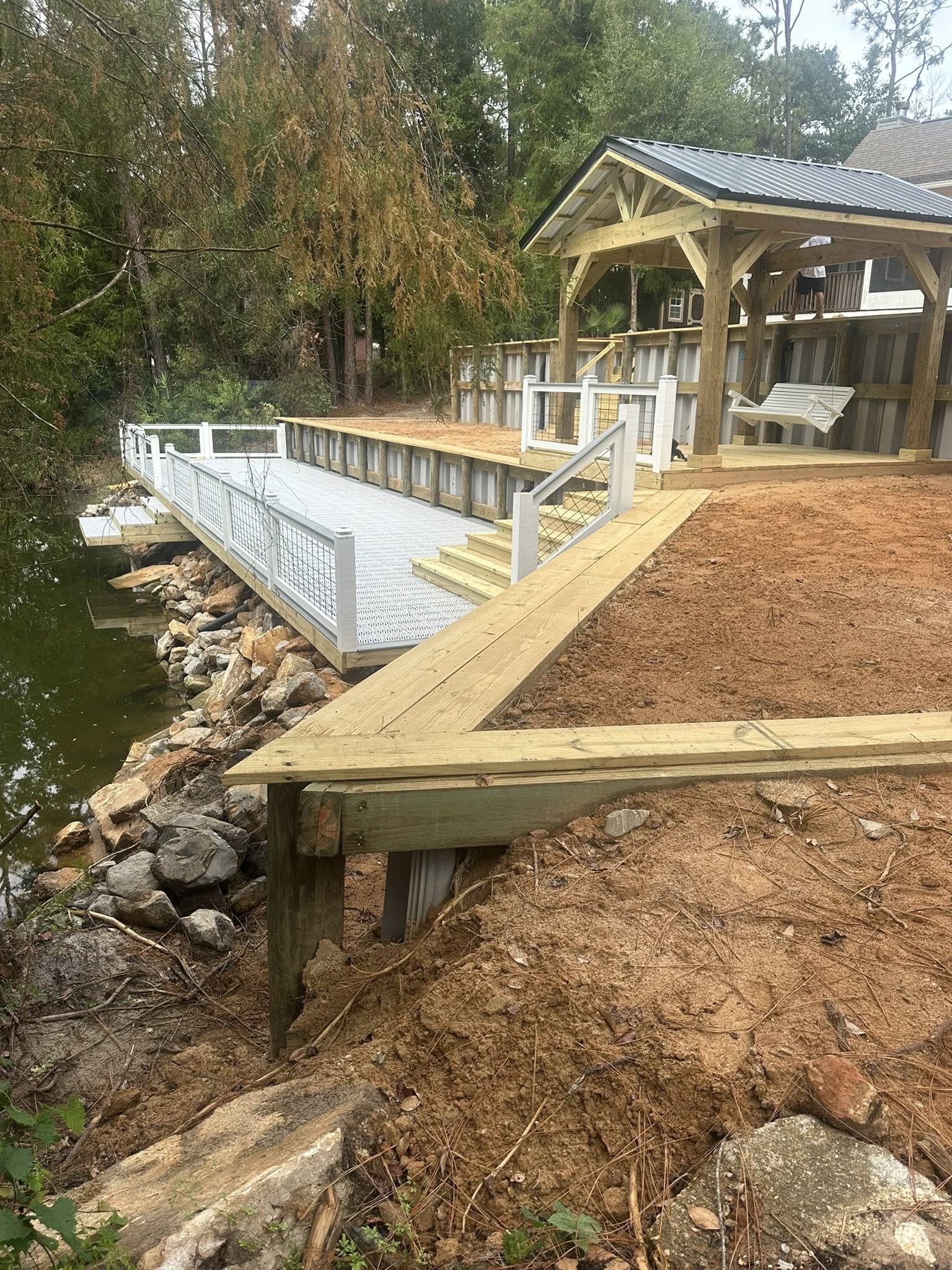
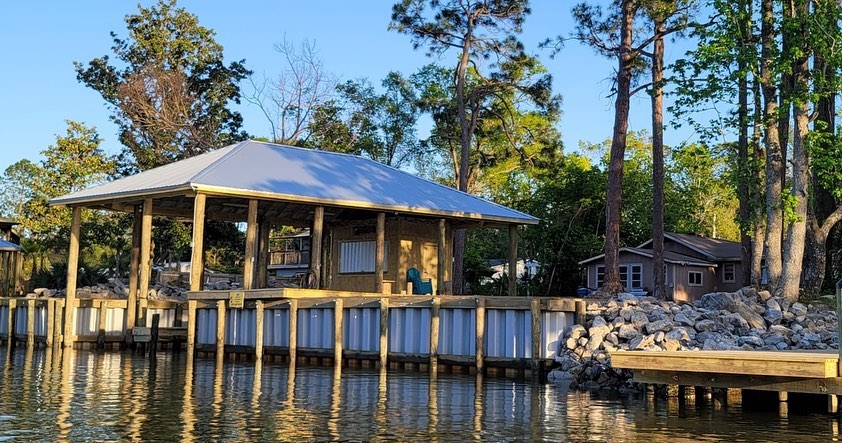
In addition to plants, incorporating durable hardscaping elements is essential. Retaining walls, seawalls, and riprap can help protect waterfront properties from erosion while providing visual structure to the landscape. Concrete and stone elements are particularly effective because they withstand heavy rain, tidal surges, and high winds.
When designing hardscape features, consider their placement in relation to water flow and prevailing winds. Strategically positioned elements can break the force of waves and redirect runoff, reducing the risk of soil loss. At Gulf Coast Land & Marine Construction, we combine engineering expertise with aesthetic design to create hardscapes that are both functional and visually appealing.
Soil Stabilization Techniques
Beyond hardscaping, proper soil stabilization is critical. Techniques such as terracing, mulching, and the use of geotextiles can prevent erosion and promote healthy plant growth. Mulch helps retain moisture and protect roots from salt exposure, while terracing can slow water runoff and reduce soil displacement during storms. Geotextiles, which are permeable fabrics laid over soil, add an extra layer of reinforcement that supports vegetation and prevents erosion in high-risk areas.
It is also important to test and, if necessary, amend soil before planting. Coastal soils often lack nutrients or have high salinity levels. Adding organic matter, sand, or specialized soil mixes can create an environment where plants thrive and root systems develop fully, further stabilizing the landscape.
Balancing Aesthetics with Functionality
While resilience is critical, beauty is the reason many choose waterfront properties. A well-designed landscape should seamlessly blend form and function. Pathways, patios, and seating areas can be constructed with durable materials that complement the natural environment while providing safe and enjoyable spaces for homeowners and guests. Native flowering plants and ornamental grasses can add color and movement, creating a dynamic landscape that adapts to changing conditions.
Designing with low-maintenance, hardy plants also enhances beauty without excessive upkeep. By selecting species that thrive naturally in coastal conditions, homeowners can enjoy vibrant landscapes year-round while minimizing the time and resources needed for care.
Preparing for Storms and Seasonal Changes
Storm preparation is a crucial aspect of waterfront landscaping. Elevating planting beds, securing loose structures, and incorporating flexible plant arrangements can help minimize damage during hurricanes or tropical storms. Choosing plants with strong root systems and flexible stems reduces the likelihood of uprooting, while strategic placement of hardscape elements can shield more vulnerable areas.
Seasonal considerations are also important. For example, planting during cooler, wetter months can give roots time to establish before the harsher summer conditions arrive. Similarly, monitoring and maintaining drainage systems throughout the year ensures water flows away from critical areas, reducing the risk of flooding and soil erosion.
Long-Term Maintenance and Monitoring
Even with a resilient design, waterfront landscapes require ongoing maintenance. Regular inspection of plant health, soil stability, and hardscape integrity ensures small issues are addressed before they become major problems. Pruning, mulching, and replenishing soil as needed helps sustain the health and appearance of the landscape.
Monitoring tidal changes, erosion patterns, and storm impact over time also provides valuable data for adjustments. This proactive approach allows homeowners to adapt their landscaping strategies to evolving conditions and ensures the property remains secure and beautiful for decades.
Partnering with Experts for Lasting Results
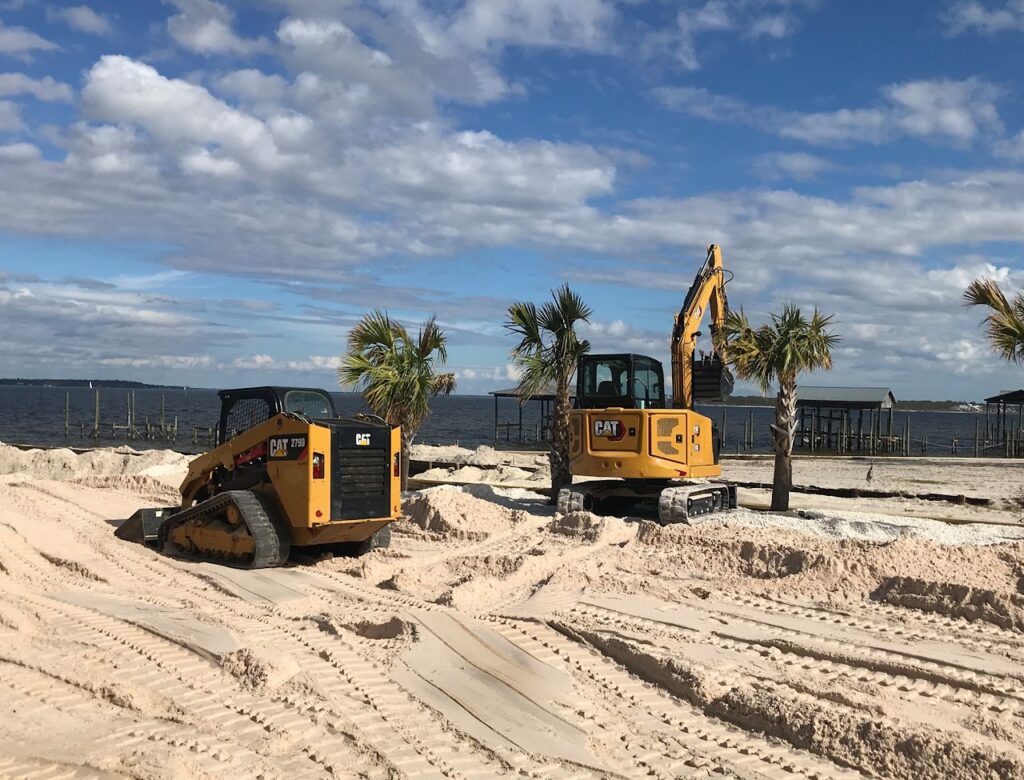
Waterfront landscaping is a specialized field that benefits greatly from professional expertise. At Gulf Coast Land & Marine Construction, we combine engineering, horticulture, and aesthetic design to create landscapes that are as resilient as they are stunning. Our team evaluates each property’s unique challenges, develops a customized plan, and executes with precision to deliver long-lasting results.
From grading and soil stabilization to plant selection and hardscape construction, every element is carefully considered. By leveraging our experience and knowledge of coastal conditions, we help homeowners protect their investment while creating a landscape that enhances the beauty and functionality of their waterfront property.
Conclusion
Waterfront living comes with unmatched beauty, but also unique challenges. Resilient landscaping requires careful planning, the right plant selections, strategic hardscaping, and ongoing maintenance to balance aesthetics with durability. By designing with the environment in mind and partnering with experts in coastal land and marine construction, homeowners can enjoy a stunning landscape that withstands storms, erosion, and the test of time.
At Gulf Coast Land & Marine Construction, we understand the intricacies of waterfront properties. We help clients transform their shoreline into a resilient and beautiful extension of their home, blending natural beauty with functional design. A well-planned waterfront landscape is not just an investment in curb appeal—it’s an investment in the longevity, safety, and enjoyment of the property for years to come.