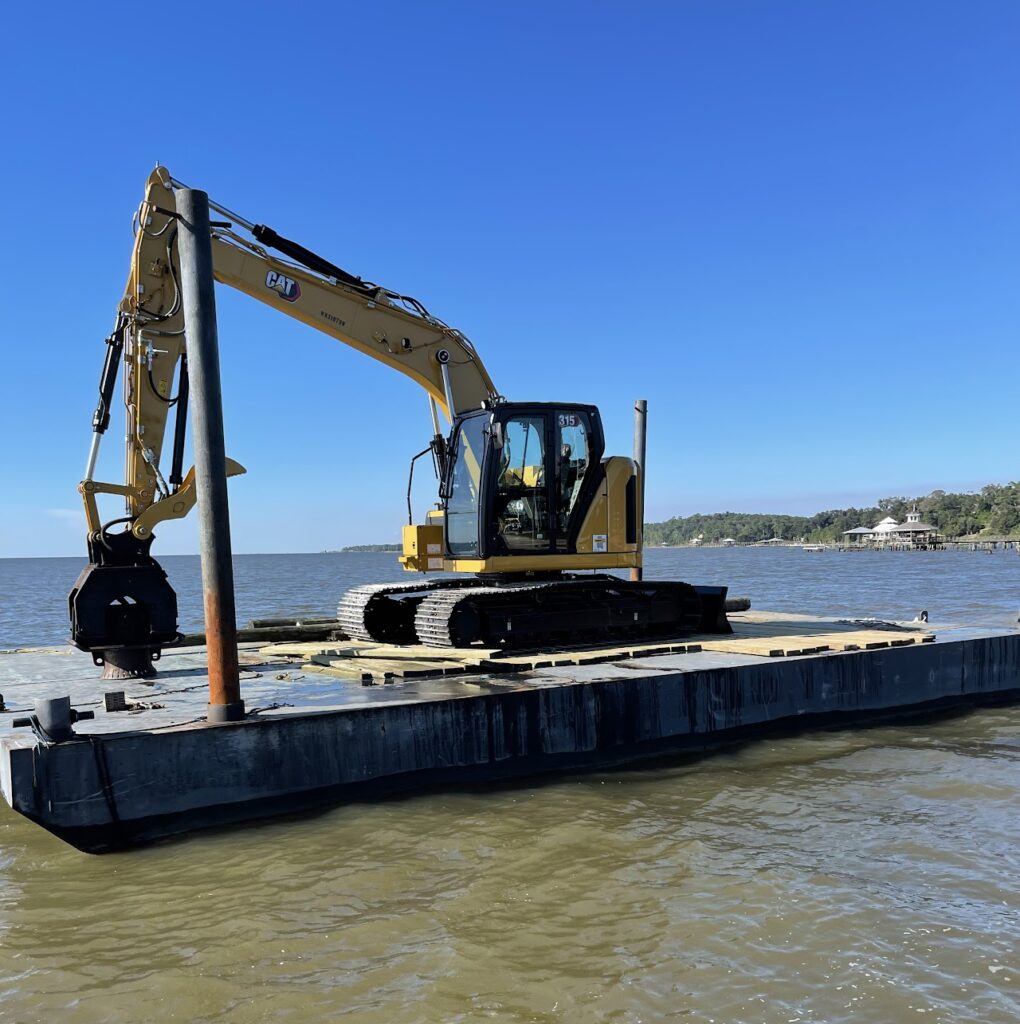
Building anything on the water is never just about having the right tools. It’s about understanding the science, the environment, the forces at play, and the stakes involved. Marine construction isn’t like working on dry land. It demands a completely different mindset—one that combines precision engineering with adaptability, environmental awareness, and creative problem-solving. While our company is equipped with industry-leading gear like linear winches, accommodation barges, and specialist marine equipment, the real power behind our projects lies in the people who know how to use them wisely. Because in this line of work, tools don’t build success—insight does.
The Ever-Changing Nature of Marine Environments
When you’re building on water, nothing is static. The tide moves. The seabed shifts. Weather turns quickly. Site conditions can vary not just from project to project but from hour to hour. What worked yesterday may fail today if the swell picks up or the wind changes. This is the reality of marine construction—and it’s why experience, data, and planning are as critical as hardware. It’s easy to think that with the right machinery, a job will go smoothly. But without a deep understanding of how those machines interact with an unpredictable natural environment, even the most sophisticated equipment can fall short. That’s why every project we take on begins not with equipment mobilization but with a scientific mindset. We consider tidal behavior, sediment composition, weather windows, access logistics, anchoring strength, and structural longevity—because building in a marine environment means thinking long-term and planning for the unpredictable.
Behind Every Machine Is a Smarter Plan
Take our linear winches, for example. These powerful systems are vital for operations like mooring installation, subsea cable laying, and barge movement. But they are only as effective as the team operating them and the data guiding their deployment. In one recent project, the client needed a series of permanent moorings placed in a tidal zone known for its shifting sands and fast-moving currents. A lesser team might have simply set the winch and hoped for the best. But our team conducted site surveys, reviewed current flow models, and adjusted the anchoring process in real time based on tension feedback and seabed resistance. The job was finished not just successfully, but ahead of schedule—because our team didn’t just rely on the machine; they relied on knowledge, communication, and quick thinking.
Accommodation Barges: More Than a Place to Sleep
That same principle applies to our barge operations. Accommodation barges may sound like support structures, but they’re critical for keeping high-performance marine construction crews on task. When your crew is working in remote or offshore locations, the ability to remain on-site, safe, and rested directly impacts productivity and project timelines. But beyond just providing housing, our barges are equipped as operational hubs—command centers that allow our teams to respond rapidly to changing conditions. During one coastal pile-driving job, the team was living aboard for two weeks straight. One night, a rare weather window opened at 3 AM. Because the crew was already on-site and systems were online, we were able to mobilize immediately, complete a high-tolerance install that would have been impossible any other time, and avoid three days of weather delays. The barge helped. But again, it wasn’t the barge alone—it was the readiness and coordination of our people, supported by the right tools in the right place.
Knowing What’s Below the Surface
Another challenge we frequently face is seabed variability. It’s not uncommon for a client to have a general site map or sonar scan and believe that the subsurface is consistent across the area. But we know better. In marine construction, the most dangerous assumptions are the ones made about what’s beneath the surface. A pile that performs perfectly in one spot can fail completely five meters away if the seabed composition changes. That’s why we always lead with investigation. Geotechnical surveys, dynamic probing, and sometimes diver inspection help us confirm that the design assumptions match reality. Recently, while preparing for a mooring array installation, we encountered an unexpected layer of soft clay buried beneath compacted sand. On the surface, everything looked stable. But that clay layer would have allowed slow movement and eventual failure under sustained load. We redesigned the anchor plan on the fly, integrating deeper embedment and reinforcing plates to distribute pressure more effectively. That project is still holding steady today, despite rough conditions and strong lateral forces. The equipment didn’t fail—but more importantly, our thinking didn’t either.
Problem Solving Is Our Most Valuable Asset
That kind of responsiveness is built into our approach. Because we’re not just marine contractors—we’re engineers, builders, and problem-solvers. We’ve developed a number of novel solutions over the years that have helped clients overcome unique land and marine challenges. Some of these have involved proprietary equipment modifications; others have been as simple as changing the sequence of operations to better suit weather and tide cycles. The key is that we never assume any job will follow a standard script. Even with repeatable systems like pile driving or anchor setting, site-specific variables mean we must always adapt. That’s what separates experienced marine construction firms from everyone else. We don’t just bring tools—we bring the ability to know what tool to use, how to use it, and what to do when it doesn’t work exactly as planned.
Risk Isn’t a Checklist—It’s a Constant Calculation
This mindset extends into how we manage risk. In marine environments, risk isn’t a checklist—it’s a moving target. Conditions change constantly, and safety is always our top priority. Our crews are trained not only on operating equipment but on understanding site dynamics, emergency protocols, and cross-team communication. During a large offshore install last year, a combination of swell and tide created an unexpected pitch on our barge platform. The winch load angle changed slightly, increasing strain on a connection point. Our team caught the tension spike in real time using onboard monitoring systems, paused the operation, and adjusted before resuming. What could have become a costly or dangerous incident instead became a demonstration of professional awareness and decisive action.
Clients Want Results—We Deliver Through Insight
Clients often ask us, “Can your equipment handle this job?” Our answer is always yes—but we follow that with, “Let us show you how we’ll plan it.” Because whether we’re laying a mooring, installing piles, supporting dredging operations, or managing a floating work site, the job isn’t just about the gear. It’s about the way we approach the environment, the risks, the timeline, and the long-term goals. The sea is powerful, and it doesn’t care how expensive your equipment is. What matters is how you use it. That’s why we’ve built our reputation not just on capability, but on clarity. Clients know that when they hire us, they’re getting more than machines. They’re getting a partner who sees the whole picture—from planning to installation, from seabed to sky.
The Paradox of Marine Construction: Be Firm and Flexible
The truth is, most marine construction challenges don’t come with clear instructions. Whether you’re building a floating dock, laying the groundwork for an offshore wind platform, or installing a temporary causeway, you’re working in a constantly shifting environment that demands both structure and flexibility. That’s the paradox of building on water—you must be rigid in your standards, yet fluid in your response. You must be prepared to act quickly, but only after thinking carefully. That’s the kind of balanced expertise we bring to every job. Our goal isn’t just to finish projects. It’s to finish them right. To leave behind structures that hold firm, installations that last, and clients who trust us to return again and again for their most complex work.
Building Trust, One Project at a Time
That trust is something we’ve earned not by talking about what we could do, but by consistently delivering what we said we would do—even when the water fights back. We’ve worked in tight harbors, rough offshore zones, and remote islands. We’ve supported large-scale industrial operations and small, critical infrastructure jobs. And in every case, our success has come not just from our hardware—but from the mindset that drives it. From the belief that no piece of equipment, no matter how advanced, can replace experience, preparation, and smart engineering.
More Than Machines: The Real Value We Bring
So, when we say that equipment alone isn’t enough, we mean it. Yes, we have the gear. But we also have the knowledge to understand the forces at work beneath the surface. We have the planning discipline to map out solutions that are realistic and safe. We have the flexibility to adapt on the fly without compromising quality. And we have the passion to take on the toughest challenges—because we know what it really takes to build on water. It takes more than machines. It takes people who understand them. People who understand the sea. And people who care enough to get it right.